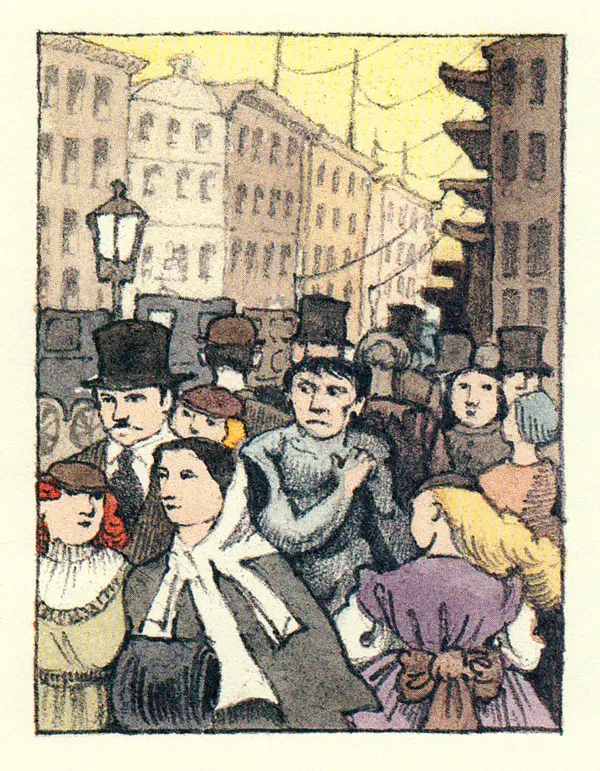
Soul-Toddler
Fiction
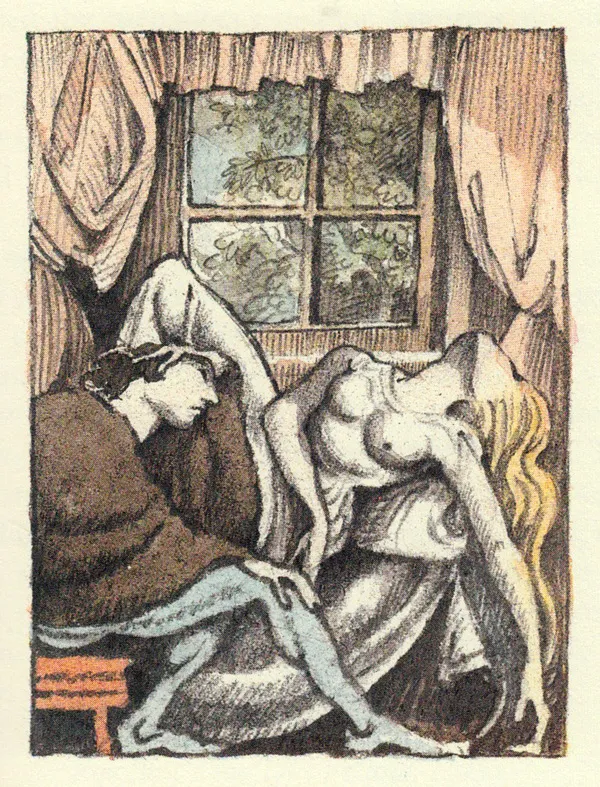
Now cruel father and mother have both let go his hand, and the little soul-toddler, now you shall hear his shriek and his wail, and often his fall.
—Herman Melville, Pierre
I went to the same schools as Mike T. for nine years before we became friends and then best friends. He was a guy I was always aware of but the coolness differential made a connection improbable. I remember reading Walden outside of our U.S. history teacher’s classroom, sitting on a thick concrete slab while the muggy Texas day commenced its pre-heating for the broil setting, and Mike T. and this other guy, Leyton, walked by me and all of a sudden wanted to be my friends now. It’s a lot simpler at that age.
The three of us were close for a few years. When I needed to tell someone about how my dad had abandoned us for another family, come back, and abandoned us a second time, these were the friends I cried to on an overnight field trip to Austin. I had a huge family but those relatives had tacitly agreed, through some unspoken code I failed to endorse, never to discuss these shame-tainted events once they had passed. Mike and Leyton will always hold that distinction in my life, bestowing the first hint of what I craved from close friendship, with its vulnerabilities and its hopeful casting about for understanding.
Mikey was a remarkably handsome kid, like a boyish Alain Delon with floppier hair, but I guess I didn’t realize the attention he was effortlessly attracting until we got to high school, and you really started to notice these things. All the girls loved him; older women made passes at him in public, a natural phenomenon that my mind couldn’t fathom; Roxanne, the fiery redhead of freshman English, surname alphabetically proximal to Mike’s (to her great convenience), pined after our boy wonder very noticeably for a year. My own face and body were as awkward as they come—I can’t even bring myself to offer any specific self-description: simply a default-settings nebbish—and thus the gulf between Mike’s looks and mine was widening precipitously as we reached those early teenage years. Mike’s own family life was much more unstable than even my situation, with his questionable paternity issues and a mother who didn’t seem to want any of her five children, so he would often spend the night at his friends’ places, including my house, revenant father now back in the picture for take three of a projection of domesticity. When Mike would stay over and turn in for bed, he was in the habit of shedding his white undershirt and just sleeping like that, half-nakedly, and I was fascinated by the threshold of confidence it would require of me to ever do the same around him. Stradlater in Catcher in the Rye—fuck this guy and his Alain Delon self-confidence. My present-day torso has not seen the sun in over a decade.
Some of these comparisons and feelings just never leave you. I always wonder why we’re all so bewitched by these high school years, why our cinema so extensively documents and narrativizes them as I myself feel compelled to do so now, why the decay of memory proves to be so slow. The persistence of the feelings defies any reasonable expectation. I can still sharply feel that sting of corrosive envy of everything that Mike was becoming, mixed with my own veiled admiration of it—long since cancell’d woe feeling fresh as ever. He was my best friend, the first person who could teach me about a world outside of my family, a world where the laws of physics had to be generalized because the approximations I’d learned of how things moved were woefully inaccurate at the cosmic scale; yet already I was starting to feel too irreconcilably different from the dazzling identities he could so easily don and doff.
I was never going to have Mike’s looks. Instead I was making “guy who reads Walden” my personality (I was ahead of the curve with performative reading), and I earnestly thought that the Perma-Bound mass-market paperbacks I was continually discovering from the school library would fashion me into a man of letters. This was my destiny and it behooved me to train myself accordingly. The Modern Library had declared that Ulysses was the best novel of the century, so I dutifully bought a copy from the Waldenbooks in the mall (the fancy mall, since I’d been bullied for patronizing the poor-people mall) and with curiosity thumbed through the 800 pages in putative search of stream of consciousness (dirty stuff). I remember realizing early on, in my own internal monologue that’s been running continuously since the dawn of my forming memories, that, if I were to survive, I needed to stand out and stake my claim as the smart kid, but I also wanted and needed to be the funny kid, because everyone always loved the funny kid. The bullies were the funny kids who won everyone’s heart. I had to figure all these dynamics out, expanded laws of physics, the actual governing equations that required new operations and new Greek symbols.
As our high school personalities started solidifying, I noticed that Mike was encroaching on my territory. He was never an A student, but he always spoke up and always had something witty to say. I was a good student only on paper: I bubbled in my Scantron sheets flawlessly, but it was not nearly the same as Mike’s holding court in Mrs. Niederhauser’s sixth-period English, making Roxanne laugh and transforming her into the heart-eyes emoji before that even existed. Mike just led himself with so much poise and bravado and winking mischief. He radiated intelligence and didn’t require a system of notecards and highlighters to accomplish the feat. If Romeo kisses by the book, I lived and died by the book and only knew the book. Mike could sonorously declaim as Romeo in class while I had to just settle for internalizing the emotions. Our class would collide against lines like
O, speak again, bright angel! for thou art
As glorious to this night, being o’er my head
As is a winged messenger of heaven
Unto the white-upturned wondering eyes
Of mortals that fall back to gaze on him
When he bestrides the lazy-pacing clouds
And sails upon the bosom of the air.
and they would sing to my soul in a way that I couldn’t explain. A miracle of human expression, rhythm, analogy, enjambment, ecstasy. The comparison to the herald angel just runs and runs, forward, skyward, breathlessly and beautifully in an outpouring of wonder. But I wasn’t the kind of person who could volunteer to recite these lines in class. The feelings couldn’t come out of me, exit me. My voice and my body weren’t instruments tuned to commend them to the air. The envy I felt for Mike was that he embodied his feeling instinctively and released it. It could be seen and it touched others. He seemed to have control over all of himself, the presence of mind, in a manner that unexpectedly reminds me, for whatever reason, of athletic prowess. With 0.8 seconds left, a basketball player through endless repetition in training can catch an inbound pass and immediately swivel to score the game-winning three-pointer. There are bodies that are so well calibrated to act when they must, to perform at peak level on demand. David Foster Wallace has a footnote about Roger Federer where he observes that the “great athletes seem to catalyze our awareness of how glorious it is to touch and perceive, move through space, interact with matter.” Mikey was an actual athlete, too (Of course he was—he ran cross-country in the early morning on the same grounds where I “played” tennis to get my P.E. credits to graduate), but he had a graceful command over how he moved through the world, and interacted with matter, for that matter. He actually was the smart kid, and the funny kid, and the handsome kid I could never be.
The summer after freshman year, Mike had to move to Houston, we thought for forever. He didn’t have reliable internet access and couldn’t sign in to AOL Internet Messenger, which is how all of us kept in touch outside of school, monitoring buddy lists and door-creak arrivals; so he would call me long distance on a landline phone to give me updates on his new life. I missed him and loved getting his landline summons. Roxanne naturally wanted to know how her last-name neighbor was doing in Houston and got in touch with me in the middle of that summer to get the relayed details. She and I started chatting on AIM almost daily about non-Mike topics and I fell in love with her hard. Out of nowhere she was apotheosized to a winged messenger unto my white-upturned eyes. I wanted to sail upon the bosom of her air. I suppose I hadn’t noticed before because I was too alphabetically distant, or peradventure because I was still in the Fair Youth phase of the sonnets and hadn’t quite graduated to the Dark Lady poems yet.
Mike thankfully moved back to my hometown before sophomore year started, so it was all just a memorable summer interlude, but that school year marked the start of our split from each other. I thought Mike was starting to get too cocksure and fit more harmoniously with a different kind of academic subculture—the students who loved to debate and enter the Ayn Rand essay contest and cite John Locke and John Stuart Mill out of their asses without having read any primary texts. Roxanne and I were deeply insecure nerds who were scared to talk in class, who didn’t know what was going on in the world, and who had to study for hours a day to be Scantron-perfect at everything; Mike treated his work so flippantly but brashly succeeded anyway. He networked with teachers and leveled with them the way an adult human being would. His broken home life tragically forced him to grow up early, but his undeniable natural gifts also made him doubly precocious. As usual, the way he moved about the world was a marvel to me, and it seemed to always earn him what he wanted.
I asked Roxanne to be my girlfriend a few days after Valentine’s Day, sophomore year. I’d walked to HEB and bought a dozen roses for the first time and written her a terrible Shakespearean sonnet in a Hallmark card, iambic pentameter, ABAB CDCD EFEF GG, like the holy palmers’ kiss of the star-crossed once again. I knew that this made me an expert on love. The one snag was that my parents didn’t want me to date until I’d graduated from college, preferably Harvard College. Roxanne knew this, so after I popped the teenage question, with requisite gravity, though in retrospect it still didn’t sufficiently communicate the draconian totality of my parents’ proscription, I forewarned: “You know it’s gonna be really hard to do this, right? We have to do everything in secret. How are we gonna handle this?”
“Well, we’re smart people,” she rejoined, coyly looking upward at me through her fiery eyes. Insanity. “She is electric / Can I be electric, too?” Apollinaire rhapsodized of another jolie rousse:
There are new fires there colors never seen
A thousand unknowable phantoms
That we must turn into reality
The naïve faith that our book smarts would somehow translate into canny parental evasion—it’s the most romantic thing that anyone will ever say to me. Alas, my dear Rox! my snowy dove trooping with crows! there’s no way you could have foreseen the painful heartache to which you were unwittingly consenting for the rest of your life. It didn’t help that, for a full year, our class rankings had Rox posted at first and me in second, a usurpation that sent my tiger parents into full apoplexy. I later found out that my mom had tearfully called my guidance counselor behind my back, wailing, “He’s doing everything he can possibly do! What more could he possibly do!” To my parents, Rox forever onward was the temptress who took me away from homework and in its place presented me with the fruit of the Tree of Knowledge. I did partake, and behold, it was good. In abstinence-only-education Texas, to harbor any ideas of sex meant that I’d degenerate into yet another profligate contributor to the calamitous teen pregnancy rate of Nueces County. For in the day that thou eatest thereof, our dreams of Harvard shall surely die.
But I only got happier and better at what I did because of Rox. I think I was severely depressed before I met her (“I think I might be losing it / The idea that you’ve existed all along’s ridiculous”). She got me on the dance floor; she encouraged me to try new foods; she changed my haircut and got me contacts; she showed me what going to the movies at night was like (My parents were horrified by $7.00 full-price tickets and concessions—early-bird matinee and smuggled Tupperware only in this family!). She loved me in a way that I never thought my ugly face would be loved. In an uncharacteristic move, my parents did slacken the leash and let me go on a class trip to France with Mike soon after my illicit but plainly obvious relationship had started. My parents had modest means, but the education of foreign lands was pre-approved knowledge: to their credit, I suppose they recognized the pedagogical value in letting me enjoy the briefest glimpse of the kind of Grand Tour that Lord Byron would have undertaken to consummate his education, but Lord Byron also fucked. A lot. James Joyce got off on Nora Barnacle’s farts—thank God that their preserved correspondence imparted this trivia to posterity. Would we even have Ulysses without an understanding of bodily excretion? If I were to be a serious man of letters, I could only “Sex can wait, masturbate” for so long. Maybe my parents just wanted me to go to France to cool down and then I would magically forget all about Rox, in vigorous competition for brainspace with my newfound continental sensibilities. A very Henry Jamesian plot indeed.
Alas, misguided parents! I used all of my phone cards at every chance I could to call the jezebel relegating me to the ignominious position of salutatorian, heaven forfend. I would find a phone booth cluster in Chambord or Amboise or Rouen and exhaust all the cards and then use Mike’s cards, my unquenchable love metered by the minute. Mike meanwhile was getting more and more distant from me. This could’ve been a continuous week of fun for us, two bros leaving the parental orbit, but he was hitting it off splendidly with the football player in our French II class who had also joined the un-Byronic Petit Tour and who went by the name Étienne for the class (We all had to adopt des prénoms français; I don’t even remember Étienne’s real name, but Mike became Michel, and I chose Josephe, in honor of Heller, recently departed). Étienne and Michel were the new Josephe and Michel. They got Royals with Cheese at McDo; they expertly flirted with the girls from the other high schools and acquired new fans with their jokes; they bought pungent fromage from a hotel vending machine and ran through the hallways, throwing it at guestroom doors. It just wasn’t my scene—we clearly weren’t the same people anymore. I was a courtly lover now. I put away childish things and they were like Fuck yeah, childish things!
I did feel a real loss of something, though. My jealousy was also growing to unmanageable proportions. On this trip, Mike kept up his ceremony of parading shirtlessly before bed, so when some girls were lingering in our room after lights-out when they weren’t supposed to, they were most appreciative of his burlesque routine and it made me sick. He knew on some level that I never liked my body, and since this obsession had been stupidly eating at me for as long as we’d been friends, I actually mustered up the courage afterward to ask my best friend, in a more innocent variant of what Fitzgerald inquires of Hemingway in A Moveable Feast, and in probably our last moment together when he acted as my confidant, if I had a good-enough body to go half-naked like him sometimes. He paused, did an honest once-over, and with magnanimity offered: “I mean, it’s not bad. Just work on your arms.”
It was becoming hard for me to stay around him. I hated that he was having so much more fun with Étienne in France; I hated that I was losing him. I hated that he was such a beautiful man, that he didn’t have to work as hard in school to prep for college. I even began to wonder whether Rox really had ever stopped her heart-eyes and whether I was just a consolation prize to her. If she laughed at his jokes, it ruined me now. For a big school presentation, Mike dressed up in a suit and tie and chopped off his signature floppy hair and it somehow still looked dashing; when Rox was genuinely stunned by his spruced-up look, I was annihilated. I could write sonnets but my arms needed work. I fucking hated my face. I wasn’t under any illusion that I was a catch; I had to work so hard to try to be as funny and smart as the boy wonder had always proved. Shakespeare once again: “For I must tell you friendly in your ear”—my ear—“Sell when you can: you are not for all markets.”
My story with Mikey had already peaked; we’d already been the closest we’d ever be. When college acceptance packets came in the mail two years later, we were barely friends anymore. He got into Princeton; my parents’ crimson dreams came true; and Rox, despite being as well-rounded as she could be, didn’t convince any elite colleges of her worthiness (“What more could she possibly do!”). I resented the entire college admissions process for the rest of my life. It was an upside-down world where all the wrong things were rewarded. Rox and I stayed together, but we both graduated in three years to reunite as soon as we could. I worked two jobs, economics research assistant and math teaching assistant, and I spent all of my money flying down to New Orleans to visit her in secret. One time after a visit home, I even flew from Texas to Boston, collected my luggage, and then immediately checked into a new flight with final destination to New Orleans all in a single day—to hide from my parents the fact that I was not flying back early for summer school but was actually spending an extra week in the Big Easy to steal more time with Rox. In general, to save money on the eleven trips I took to New Orleans, I would always book the worst flight plans imaginable, often starting with a 5:30 AM US Airways out of Boston; and since the T didn’t run overnight, I would ride the Red and Silver Lines right before they shuttered and then hang out at the airport in the dead of night for five hours. One time in Logan Airport I met a Venezuelan tourist named Webster with whom I apparently shared the same frugality strategy. Les beaux esprits se rencontrent. He barely spoke English, but he was so excited from his sightseeing tour of Harvard, and on his digital camera he showed me his recent pictures of Annenberg Hall where I ate alone every day. When one of us napped, the other stood vigilant, like a trust system of nautical watchkeeping. Then the first Dunkin opened, we broke our fast together, and the strangers in the night parted from each other with their hard-earned savings securely in pocket.
When we were all in college, Mike visited me once. My freshman roommate was surprised to learn that I had a friend because I was alone and depressed every day, tethered by an external webcam, talking to Rox. Mike crashed on my dorm floor, just like high school days when he and Leyton were the original auditors of my sad stories, but it wasn’t the same intimacy anymore. Zero chance of a Hemingway assay now. Still, he would take the time to write me some letters as well. They were usually multiple leaves of lined notebook paper, front and back, with his preferred gel pen that always bled through to the other side. I can still picture the jagged angles of his handwriting, because the world used to exist on paper. When I read the biographies of writers like Herman Melville, I appreciate how much we depend on letters and journals as firsthand evidence of a life. From that era, how would we know how someone lived outside of this? What is the written record, the public record? And what if you aren’t even in the public? What if you’re the “mute inglorious Milton” whom Thomas Gray eulogized, existing silently in a “cool sequester’d vale of life,” no notoriety, no documentation—the ultimate fate of nearly all of us? I might have a digital trail of Square transactions, orders of magnitude more voluminous than the accounting ledgers that record for us the meager profits from Melville’s books, and yet it all means nothing, tracks no feeling, no epiphany.
Melville’s letters might have had utilitarian functions of coordination, just like an iMessage today, but they also left astonishing paper trails of lives lived. What a precious byproduct of proto-texting: the poetry of his inner thoughts, the capture of life-changing emotions never to be realized in exactly that way again. “In me divine magnanimities are spontaneous and instantaneous—catch them while you can,” beseeched Melville of his impossibly idealized friend. Because of letters, we directly know how much it galvanized Melville when Hawthorne approved of Moby-Dick. Fatefully he realized it was possible that someone else might understand him, and know him. I, in turn, don’t have any of Mike’s gel-ink letters anymore. A biographer would say they are no longer extant. I likely tossed them in another jealous fit, in bitter resentment for the ultimate college rewards that he was savvy enough to figure out but Rox wasn’t.
In our quasi-estrangement today, I did text Mikey the other day to tell him that his college letters meant a lot to me. I thumb-typed out, in some wistful mood, with some very old 4×6s in front of me: “You really were a good-looking kid. I’m sad that I was jealous (I’m glad I can admit it now) and we grew apart in college. You were so smart and so funny and it was all so easy for you. And you were the only person who would care enough to hand-write multiple letters to me. It meant a lot. Thank you.”
He responded with some strained “it’s not bad"-style allowances to me again and concluded with: “I regret I grew distant, too. We should still fix that.” We haven’t fixed that, and I’m not sure in what universe such a friendship would even make sense. We get older and the laws of physics keep changing. Black holes get photographed and animated; the particle accelerator keeps shitting out shit.
The final blow came long before this exchange, though, maybe half a dozen years out of college. We were all at that age, maybe 28 or 30, when all of my co-workers were humblebragging about their being just exhausted from attending 10 weddings a year. Destination wedding in Bali, destination wedding in India, destination wedding in Scotland. Rox and I, the erstwhile Scantron wunderkinder, were starving and broke in Brooklyn, sputtering in our careers, floundering like the soul-toddlers we were. We couldn’t even afford to fly to domestic weddings. That was moot, though, because we didn’t have any friends; we never learned how to make any after high school. Almost everyone we knew from childhood stayed in Texas; few had the hubris to try living in New York and staying for more than five years, though Mike happened to be one of them. Mike and I had not been in touch for a long time when he told me he was getting married. He followed up the joyful announcement to me with a standard tactic from the etiquette guidebook.
“It’s a really small wedding. Like a really small … wedding. Just family. Honestly just my family and hers. It’s a tiny space.”
I was all right with that: why would I ever presume to attend the wedding of a dude I didn’t know anymore, a dude I stopped knowing after the flung fromage and The Fountainhead as vade mecum and the Princeton admission?
But he kept going with a supernumerary addendum: “I’m having a bachelor party with all of my college buddies. They booked me on a flight—I don’t know where! I’m just gonna find out en route!
“There’s gonna be so much drinking. Like so much drinking. I don’t think you would like it—it’s really not for you. But maybe you and Leyton and I could do something separate.”
He had been Leyton’s best man; now Leyton would be his. A closed loop, a third wheel. It’s bizarre to think that this very polite and utterly reasonable rebuff became a major demarcation in my life. I ended up suddenly sobbing in a therapy session just because of this unvitation. Like a fuckin child. It was the exact moment that I realized that Rox and I were adrift in the world with no friends and no support. We’d been trying our best to stake a claim, the live-by-the-book kids who thought they could improve the situations they were born into—well, we are smart people, after all—and none of it was working. Whenever I had to put an emergency contact down on some bureaucratic form, none of our parents made any sense, so I chose the random co-worker I talked to the most. I don’t know why I never learned how to do anything useful, like meeting people, but I hark back to the athletic grace with which Mikey worked a room, talked to adults, got what he wanted out of life. The man of letters manqué, meanwhile, has to desperately reach for the current-day bard, always for someone else’s words to say it better than he can.
Every day is the same thing out the door
Feel further away than ever before
Some things in life, it gets too late to learn
Well, I’m lost somewhere
I must have made a few bad turnsI see people in the park forgetting their troubles and woes
They’re drinking and dancing, wearing bright-colored clothes
All the young men with their young women looking so good
Well, I’d trade places with any of them
In a minute, if I could
It’s weird to be surrounded by the shadow wealth of the exclusive carnival of New York. Everyone else has money and I don’t know how they get it. It’s weird to have some parts of your life going piss-poorly while the public-facing side of it chugs along professionally. I feel like I’m living a different kind of shadow life, or counterlife: I have an entire life of pain that no one sees. I tried my inadequate best to turn a phantom into a reality, to seize fires and colors never seen. But we all still need an auditor to receive, in human sympathy, our tales of woe. ■